
PHYSICS
Airborne for under a second
Time in the air depends only on how high you rise. A 1 metre leap gives about 0.9 seconds, and nothing you do mid-air changes the path your body has started on.
Time a jump
THE PHYSICS OF THE DUNK
10 FT 3.05 m to the ring
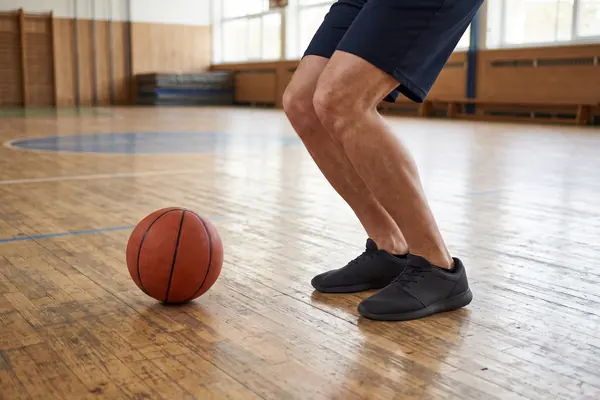
AI-generated image, not a photograph of a real person or place.
A dunk is a short trip against gravity.
The ring is 10 feet off the floor, and once your feet leave it your path is already set. Here is what the numbers say about the jump, the hang time and the nine seasons college basketball said no.
THE SHORT ANSWER
A dunk is physics, rules and practice.
Each card takes one of them.
PHYSICS
Time in the air depends only on how high you rise. A 1 metre leap gives about 0.9 seconds, and nothing you do mid-air changes the path your body has started on.
Time a jumpHISTORY
US college basketball banned the dunk before the 1967-68 season, citing injuries and broken equipment, and only allowed it back before 1976-77.
Read the historyTRAINING
A review of 26 studies found jump training added about 8.7% to a countermovement jump in healthy people. Learning to land is part of it.
Training notes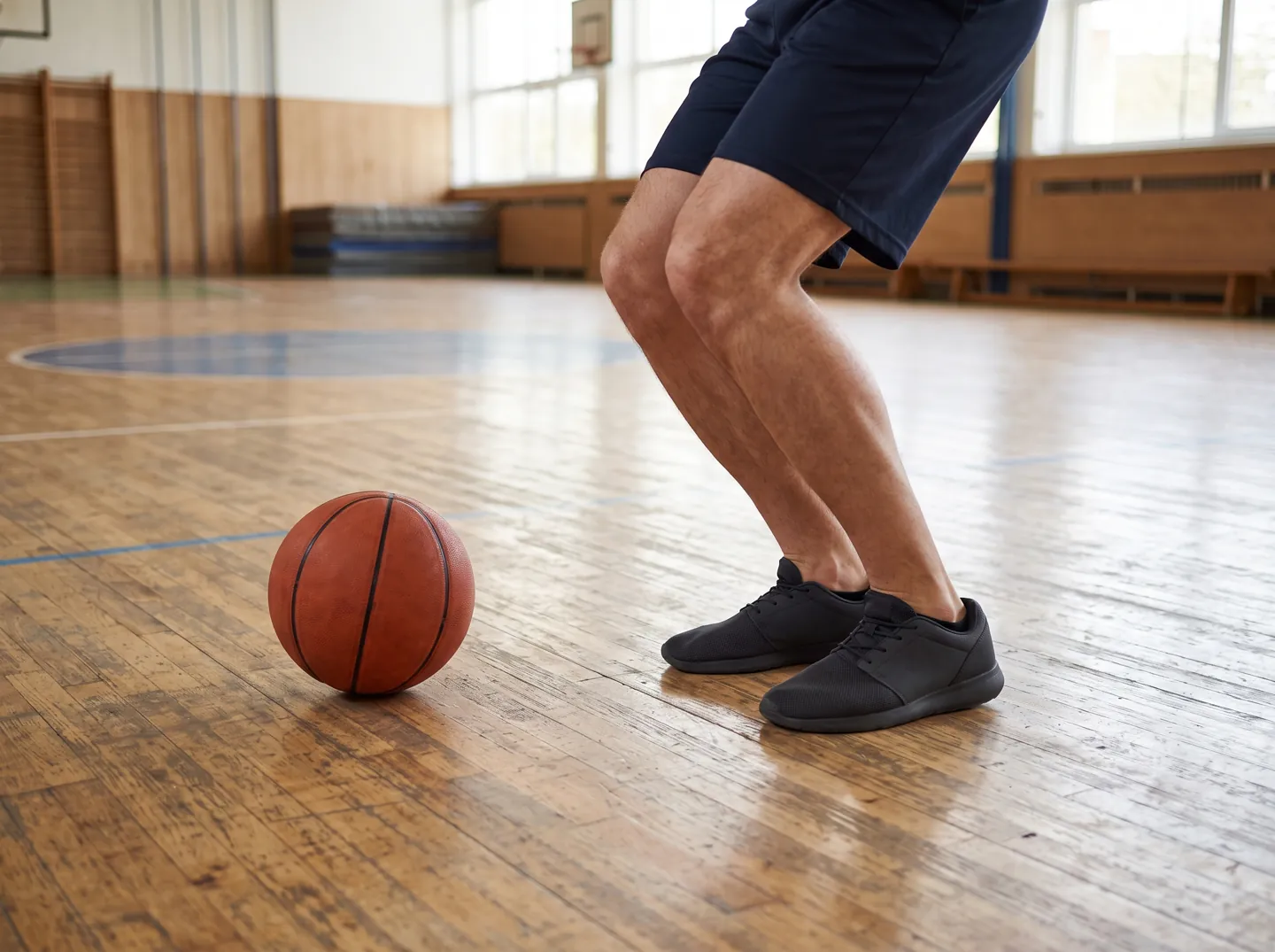
IF YOU WANT TO JUMP HIGHER
These are general notes from the sources below, not a training plan. If you have not exercised for some time, or have a medical condition, the NHS says to speak to your GP first.
Mark your standing reach on a wall, then jump and touch as high as you can. The difference is your vertical leap.
A quick knee bend before take-off added about 12% to jump height, and a strong arm swing about 10% more.
The NHS advises strengthening activities for all major muscle groups, legs and hips included, on at least 2 days a week.
A coach quoted by Popular Science stresses landing with the impact spread through ankles, knees and hips: your body only jumps as high as it trusts itself to land.
TWO NUMBERS WORTH KNOWING
One figure from the 1967 rule change,
one from a review of jump-training trials.
1,500+ injuries
Injuries around the backboard in 1967
When the NCAA rules committee banned the dunk, it cited injury concerns first: more than 1,500 injuries around the backboard in 1967. Shattered backboards and bent rims were the other reason.
THE 1967 BAN · NCAA NEWS
≈ 8.7%
Gain in countermovement jump height
A meta-analysis of 26 studies in the British Journal of Sports Medicine found plyometric training raised countermovement jump height by 8.7% on average in healthy people (95% CI 7.0 to 10.4%).
JUMP TRAINING · BJSM 2007
The same review found smaller average gains for a squat jump and a drop jump (4.7% each) and 7.5% for a countermovement jump with arm swing.
HOW LONG IN THE AIR?
Choose how high the jump lifts your body. The value is the total time from take-off to landing, worked out from the standard jump formula. The bar shows how long that is.
Calculated with h = g × t² / 8 and g = 9.81 m/s². Rounded to two decimal places.

THE YEARS WITHOUT A DUNK
The NCAA rules committee outlawed the dunk before the 1967-68 season. Its report cited injuries first, and backboards were being shattered and rims bent, with some games cancelled because the basket could not be replaced.
Scoring did not suffer: average field goals made in Division I men's games rose during the ban. The dunk returned to games before the 1976-77 season, though not yet in pre-game warm-ups, where officials could give a technical foul.
In conversation
The top edge of the ring is 10 feet (3.05 m) above the floor, the same under NBA and international rules. The NBA rulebook also sets an 18-inch inside diameter for the ring.
It would take a rise of about 1.2 metres or more. It has been suggested people cannot pass one second of hang time, but Popular Science notes there is no hard science proving a limit.
No. The path of your centre of gravity is fixed the moment you leave the floor. Moving arms and legs can shift where your hands are, which is how players appear to reach further.
You move slowest near the top of a jump. Because height grows with the square of time, half of your time in the air is spent in the top quarter of the jump.
A 2007 meta-analysis of 26 studies found plyometric training improved vertical jump height in healthy people, by 4.7% to 8.7% on average depending on the type of jump.
Each figure on this page comes from the sources below.
ABOUT THIS NAME
doodledunk.com is part of the DoodleSale portfolio. It isn't in an auction right now, but you can ask about leasing it.